

Common sword display mistakes are errors in mounting, environment, orientation, and maintenance that cause corrosion, physical damage, and cultural disrespect to collectible blades. Every collector who has watched a prized carbon steel katana develop surface rust or a lacquered saya crack under direct sunlight understands the cost of these oversights. The good news is that every one of these errors is preventable. At Moonswords, we have seen collections transformed simply by addressing the fundamentals: proper humidity control, purpose-built mounts, traditional orientation, and consistent oiling schedules.
1. What are the most common environmental mistakes in sword display?
The environment surrounding a displayed sword is the single greatest threat to its long-term condition. Carbon steel blades are highly reactive to moisture. High humidity areas cause rapid corrosion within months, even when occasional maintenance is applied. Bathrooms, laundry rooms, and basements are the worst possible locations for any carbon steel sword.
Direct sunlight compounds the problem. UV exposure fades lacquer finishes, degrades the saya (scabbard), and causes uneven thermal expansion across the blade. A sword mounted near a south-facing window in summer can experience repeated heating and cooling cycles that stress the metal at the habaki (blade collar) and nakago (tang).
The right environment keeps relative humidity between 40% and 60% and avoids temperature swings. A climate-controlled interior wall, away from windows and HVAC vents, is the correct choice.
- Avoid bathrooms, kitchens, and laundry rooms entirely
- Keep the display room between 40% and 60% relative humidity
- Never mount a sword on an exterior wall where temperature fluctuates
- Use a hygrometer to monitor humidity year-round
Pro Tip: Place a small silica gel packet inside any enclosed display case to absorb excess moisture without chemical contact with the blade.
2. Neglecting regular oiling and maintenance
Oiling is not optional for carbon steel swords. A blade left unoiled for weeks will begin oxidizing, especially in humid climates. Choji oil, the traditional Japanese mineral oil blend used for centuries on tamahagane steel, creates a thin protective barrier that slows oxidation without altering the hamon (temper line) or hada (grain pattern).
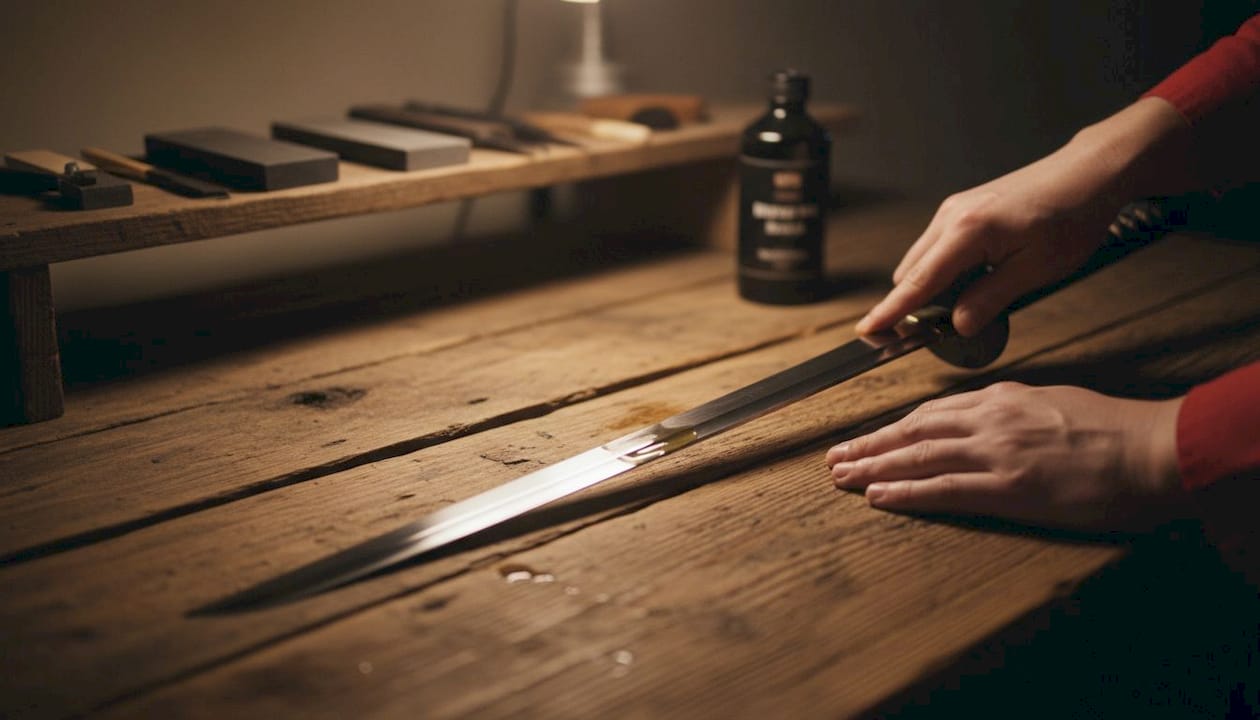
Collectors who clean and oil regularly avoid the pitting and staining that are common among neglected swords. Pitting is irreversible. Once the surface steel is compromised, no amount of polishing restores the original finish without removing material.
A practical schedule for most indoor environments is a light oiling every four to six weeks. In coastal or humid climates, every two to three weeks is safer. Wipe the blade clean with a soft microfiber cloth before applying a thin, even coat of oil along the flat of the blade.
Pro Tip: Never apply oil directly from the bottle. Pour a small amount onto a clean microfiber cloth first, then draw it along the blade from the habaki toward the kissaki (tip) in one smooth pass.
3. What common hardware errors threaten display safety?
Mounting hardware is where many collectors make their most costly and dangerous mistakes. Improvised mounting hardware and cheap brackets cause lacquer finish degradation and create unstable displays. A sword weighing three to four pounds mounted on a single drywall anchor is a safety hazard, not a display.
Mounting into wall studs or using heavy-duty anchors rated above twice the sword’s weight is the minimum standard for safe installation. Failing to locate studs before drilling leads to wall damage and mounts that loosen over time. Drywall anchors degrade if reused at the same hole for heavy sword mounts. Relocating to a fresh anchor point restores structural integrity and prevents accidents.
Purpose-built sword mounts use padded contact points, typically wrapped in felt or suede, to protect the saya and tsuba (hand guard) from scratches. Generic metal hooks apply concentrated pressure to lacquered surfaces and leave permanent marks.
| Mount type | Contact protection | Stud or anchor required | Weight rating |
|---|---|---|---|
| Purpose-built sword bracket | Padded felt or suede | Stud preferred | Rated for sword weight |
| Generic metal hook | None | Anchor only | Often unrated |
| Improvised shelf bracket | None | Variable | Unknown |
Pro Tip: Before drilling, use a stud finder and mark the stud locations with painter’s tape. Plan your full mount layout on paper first, then transfer measurements to the wall.
Mounting plans drawn in advance and stud locations identified before drilling produce balanced, aesthetically pleasing displays. Well-placed mounts signal intentionality and reduce the risk of awkward, off-center installations.
4. Ignoring traditional orientation for katanas
Traditional Japanese sword etiquette is not decorative custom. It carries practical and symbolic weight that serious collectors respect. Katanas displayed with the blade edge facing up and the handle oriented to the left follow centuries of established practice. This orientation allows the sword to be drawn with the right hand in a single fluid motion, a posture that historically signaled readiness and respect.
Displaying the edge down or the handle to the right violates this tradition and, more practically, places uneven stress on the blade where it rests against the mount. Over time, edge-down mounting can cause micro-deformation at the contact points, particularly on thinner shinogi-zukuri (ridged blade) profiles.
“A katana displayed with the edge up and handle left is not merely following tradition. It is acknowledging that the sword is a living object with a correct posture, one that collectors are entrusted to maintain.”
Leaving swords unsheathed for long periods increases exposure to dust, humidity, and physical wear. For display purposes, keeping the blade sheathed in its saya reduces maintenance burden and protects the polish.
- Display katanas with edge up and handle to the left
- Keep blades sheathed unless the display specifically showcases the blade
- Avoid resting the edge directly on unpadded mount surfaces
- Rotate unsheathed display swords back into their saya every few months
5. Poor lighting and placement choices
Lighting is one of the most underestimated factors in sword display. Directional lighting with high color rendering index (CRI) values, combined with neutral, semi-matte backdrops, brings out the hamon and blade geometry without creating glare. Harsh spotlights and high-contrast backgrounds produce reflection hotspots that obscure blade detail and cause visual discomfort.
Display lighting should be designed like an architectural project, balancing safety, aesthetics, and visual comfort. A warm LED strip positioned at a 30-to-45-degree angle above the blade highlights the hada and hamon far better than a single overhead bulb. For collectors who want a deeper guide, Moonswords has a dedicated resource on sword display lighting that covers CRI values, beam angles, and color temperatures in detail.
Placement height matters as much as lighting angle. Mounting swords at eye level (roughly 60 to 66 inches from the floor to the center of the blade) keeps them visually accessible and reduces the risk of accidental contact from people walking past.
- Use warm LED lighting with a CRI above 90 for accurate color rendering
- Avoid direct sunlight and UV exposure at all mounting locations
- Choose matte or neutral backdrops over glossy or high-contrast surfaces
- Mount at eye level and away from high-traffic pathways
Pro Tip: A vertical sword arrangement angled at 3 to 5 degrees adds visual movement and dynamic balance while conserving wall space, particularly useful for multi-sword displays.
6. Handling and cleaning errors that damage blades
Bare-handed blade contact is one of the most common sword care mistakes collectors make. Handling blades without gloves transfers skin oils and moisture that accelerate oxidation, often leaving fingerprint-shaped rust spots within days on unprotected carbon steel. Cotton or nitrile gloves are the correct choice for any direct blade contact.
Cleaning with abrasive materials is equally damaging. Steel wool, rough cloths, and household cleaning sprays scratch the blade’s polished surface and destroy the patina that protects older steel. Using abrasive materials during cleaning scratches the patina and finish, degrading the sword’s value and appearance.
The correct cleaning method uses a soft microfiber cloth, distilled water for light surface dust, and a food-grade or choji oil finish. Never use tap water, which contains minerals that leave deposits on polished steel.
- Put on clean cotton or nitrile gloves before touching the blade
- Wipe the blade with a dry microfiber cloth to remove surface dust
- For stubborn residue, use a cloth lightly dampened with distilled water
- Apply a thin coat of choji oil along the flat of the blade
- Wipe away any excess oil with a fresh, dry microfiber cloth
Pro Tip: Inspect the nakago (tang) for rust when you clean. Tang rust is invisible from the outside but weakens the blade’s structural integrity over time. A loose handle is the first warning sign.
7. Treating mounts and stands as an afterthought
Treating sword mounts as an afterthought leads to amateurish displays. Investing in quality, purpose-built mounts elevates the collection’s perceived value and protects the sword physically. A well-chosen sword stand communicates that the collector takes the craft seriously.
Many collectors buy the sword first and then scramble for a mount that fits. This approach produces mismatched hardware, wrong spacing, and displays that look improvised. The correct sequence is to plan the display space, select the mount, and then acquire the sword with the final presentation in mind.
For collectors building a multi-sword wall display, a minimalist versus traditional display approach changes both the hardware requirements and the visual outcome. Minimalist arrangements use fewer, larger pieces with deliberate negative space. Traditional arrangements layer multiple swords with cultural context and period-appropriate accessories.
Starting with one well-displayed sword beats crowding a wall with ten poorly mounted ones. Restraint is a mark of a serious collector.
Key takeaways
Proper sword display requires controlling the environment, using purpose-built mounts, following traditional orientation, and maintaining a consistent oiling schedule to prevent corrosion and physical damage.
| Point | Details |
|---|---|
| Control humidity and temperature | Keep relative humidity between 40% and 60% and avoid exterior walls and sunlight. |
| Use purpose-built mounts | Padded, rated hardware mounted into studs prevents falls and protects lacquer finishes. |
| Follow katana orientation rules | Display edge up and handle left to honor tradition and reduce blade stress. |
| Oil carbon steel regularly | Apply choji oil every four to six weeks to prevent oxidation and pitting. |
| Plan before you drill | Draw your mount layout in advance and locate studs to achieve a balanced, safe display. |
What I have learned from years of watching collectors get this wrong
A collector’s hard-won lessons on display
I have seen the same mistakes repeated across collections at every level, from first-time buyers to seasoned collectors with decades of experience. The most painful one is always the same: a beautiful carbon steel blade, mounted in a bathroom or near a kitchen window, discovered months later with surface rust spreading from the habaki toward the kissaki. The sword was not neglected out of carelessness. The collector simply did not know that humidity was the enemy.
What I have come to believe is that most display errors are planning errors. Collectors spend hours researching the blade and minutes thinking about where it will live. That imbalance shows up fast. The mount wobbles. The lighting washes out the hamon. The saya cracks from thermal stress. Every one of those outcomes was predictable and preventable.
My honest advice is this: treat the display as seriously as the acquisition. A hand-forged tamahagane blade deserves a mount that was chosen with the same care as the steel itself. Start with one sword, one quality mount, and one well-lit wall. Get that right before adding more. A single sword displayed with intention says more about a collector than a crowded wall of poorly mounted pieces ever will.
— Kenji Smith
Moonswords collections built for proper display
Every sword in the Moonswords catalog is designed with display in mind from the first fold of the steel. The fittings, the saya finish, and the full tang construction all contribute to a blade that holds up under long-term display conditions without compromising structural integrity.

Whether you are looking for a clay-tempered premium katana with a hand-polished hamon or a functional piece that doubles as a display centerpiece, Moonswords offers options built to the standards this article describes. Our full katana collection includes detailed specifications on steel type, fittings, and recommended display conditions so you can match the sword to your display environment before you buy.
FAQ
What causes sword rust during display?
High humidity is the primary cause of rust on displayed carbon steel swords. Bathrooms, kitchens, and laundry rooms trigger surface corrosion within months even with occasional maintenance.
Which direction should a katana face on a wall mount?
Traditional Japanese etiquette requires the blade edge to face up and the handle to point left. Displaying edge down or handle right violates this convention and places uneven stress on the blade.
How often should I oil a displayed carbon steel sword?
Oil carbon steel blades every four to six weeks in normal indoor conditions. In coastal or humid climates, every two to three weeks is the safer schedule.
What type of mount is safest for wall display?
Purpose-built sword brackets with padded contact points, mounted directly into wall studs or heavy-duty anchors rated above twice the sword’s weight, are the safest option. Generic metal hooks and improvised hardware create unstable displays and scratch lacquer finishes.
What is the best lighting for a sword display?
Warm LED lighting with a CRI above 90, positioned at a 30-to-45-degree angle above the blade, highlights the hamon and hada without glare. Avoid direct sunlight and high-contrast backgrounds, which obscure blade detail and accelerate finish degradation.