

High carbon steel blade maintenance is defined as a consistent routine of cleaning, drying, oiling, and sharpening that prevents rust and preserves edge performance. Unlike stainless steel, high carbon steel (the industry term for steel with 0.6% or more carbon content) reacts quickly to moisture, acids, and humidity. That reactivity is exactly what gives it superior edge retention and toughness. The tradeoff is that you must respect the material. Follow the steps in this guide and your blade will perform better and look more distinguished with every passing year.
How to maintain high carbon steel blade: core habits
The four non-negotiable habits are immediate rinsing, thorough drying, protective oiling, and regular sharpening. Miss any one of them consistently and you will fight rust instead of preventing it. Maintaining the blade takes less than 30 seconds after each use. That figure matters because it removes the most common excuse for skipping the routine.
Camellia oil (tsubaki oil) is the traditional protective coating for Japanese blades and remains the gold standard for high carbon steel care. Food-grade mineral oil is a widely available alternative. Both create a thin moisture barrier that blocks oxidation between uses. Sharpening on whetstones every 4–6 weeks, combined with weekly honing or stropping, keeps the edge geometry intact without removing unnecessary steel.
Why washing and drying correctly prevents most rust
The single biggest cause of rust on high carbon blades is residual moisture left on the steel after use. Blood acids begin etching the blade within hours of contact, which means cleaning after field use is not optional. Fat, citrus juice, and even tap water all accelerate oxidation if left to sit.
The correct washing process:
- Hand wash only with warm water and a small amount of mild dish soap. Gentle cleaning preserves sharpness and prevents corrosion compared to harsh detergents or abrasive scrubbers.
- Never put a high-carbon blade in a dishwasher. The heat, prolonged moisture, and aggressive detergents will cause immediate surface rust and can warp the handle.
- Never soak the blade. Even a five-minute soak introduces moisture into the tang-handle junction that is nearly impossible to dry completely.
- Rinse quickly and move directly to drying.
Drying is where most people cut corners, and it is where rust starts. Moisture hides in blade features like the choil (the unsharpened notch where blade meets handle), the jimping (the textured thumb rest), and the tang-handle junction. Each of these recesses traps water that a quick wipe will miss entirely.
Use a clean, lint-free cloth and work methodically from spine to edge, then address every recess individually. A dedicated knife towel kept separate from dish rags prevents cross-contamination with food oils and detergent residue.
Pro Tip: Keep a microfiber cloth rolled up next to your knife block. The texture pulls moisture out of tight recesses far more effectively than standard cotton towels.
How to apply oil and protect the blade during storage
Camellia oil does not go rancid and is preferred for long-term protection over cooking oils like olive or vegetable oil, which break down and become sticky. Food-grade mineral oil is the practical alternative for anyone who cannot source camellia oil locally.
Oiling procedure:
- Apply two to three drops of camellia oil or food-grade mineral oil to a clean cloth or cotton pad.
- Wipe the entire blade surface in one direction, from spine to edge, covering both flat faces and the spine itself.
- Wipe off the excess with a dry cloth. A visible oil film is too much. You want a thin, almost invisible coat.
- Repeat this process before every storage period, not just occasionally.
Early rust detection is part of the oiling routine. When you apply oil, you are also inspecting the blade under good light. Orange or reddish spots are active rust and need immediate attention. Gray or blue-black discoloration is patina, which is protective and desirable.
Pro Tip: If you spot a small rust spot during your oiling check, address it immediately with a rust eraser or a paste of baking soda and water. Early rust removal prevents long-term damage and keeps the blade looking clean.
Storage location matters as much as the oil itself. Avoid storing blades in humid environments like under-sink cabinets or unventilated drawers. A knife block, magnetic strip, or individual blade guard in a dry location is the correct choice for carbon steel blade upkeep between uses.
How to sharpen carbon steel: intervals, tools, and technique
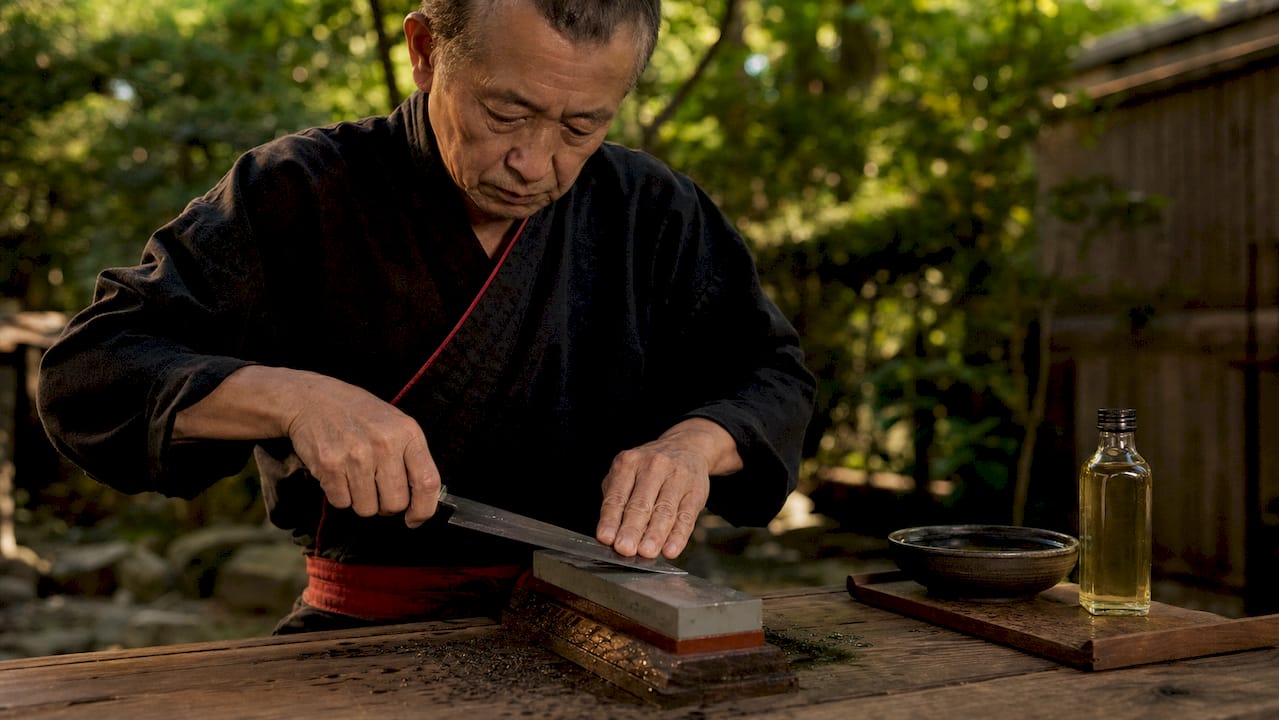
High carbon steel takes a finer edge than most stainless alloys and holds it longer, but it still requires a disciplined sharpening schedule. Sharpen on whetstones every 4–6 weeks for typical use, and hone or strop weekly or biweekly to maintain the edge between full sharpening sessions. That two-tier system is what separates blades that stay razor-sharp from blades that slowly degrade.
Step-by-step stone sharpening process:
- Start with a medium-grit whetstone (1000 grit) to set the bevel angle. For most high-carbon knives and katanas, this is 15–20 degrees per side.
- Maintain consistent pressure and angle throughout each stroke. Inconsistency is the primary cause of an uneven edge.
- Progress to a fine-grit stone (3000–6000 grit) to refine the edge and remove the scratch pattern left by the medium stone.
- Finish with 10 passes per side on a leather strop. Stropping removes wire burrs and aligns the apex, producing a noticeably sharper edge.
- Test sharpness with the paper-slice test or the thumbnail catch test before putting the blade away.
Sharpening method comparison:
| Method | Best For | Risk Level |
|---|---|---|
| Whetstone (1000–6000 grit) | Full sharpening sessions | Low with practice |
| Ceramic honing rod | Weekly edge maintenance | Low |
| Leather strop | Post-sharpening refinement | Very low |
| Pull-through sharpener | Not recommended for high carbon | High (micro-chipping) |
| Electric grinder | Not recommended | Very high (heat damage) |
Avoid pull-through sharpeners and grooved steel rods entirely. These tools remove metal aggressively and at inconsistent angles, causing micro-chipping along the edge of high carbon steel. The damage is cumulative and eventually requires significant regrinding to fix.
Pro Tip: Strop your blade on a leather strop before each use, not just after sharpening. Five passes per side takes ten seconds and keeps the edge aligned between full sharpening sessions.
What is patina, and how does it protect your blade?
Patina is a stable oxidation layer that forms on high carbon steel through contact with food acids, moisture, and air over time. Patina formation reduces reactive oxidation and makes the blade less reactive and easier to maintain. Think of it as the steel developing its own protective skin. It is not damage. It is the blade maturing.
New blade owners often mistake patina for rust and try to polish it off. This is counterproductive. A well-developed patina actually slows future rust formation by occupying the reactive surface sites on the steel. Experienced collectors and practitioners actively encourage patina development.
Patina vs. rust: how to tell the difference:
- Patina appears as a gray, blue, or dark brown discoloration. The surface feels smooth. It does not spread rapidly.
- Active rust appears as orange or reddish spots. The surface feels rough or pitted. It spreads if left untreated.
You can accelerate patina development safely by wiping the blade with a cut potato, apple, or mustard and letting it sit for 30 minutes before rinsing and drying. This forces a controlled, even patina rather than the uneven blotching that comes from random food contact.
Rust removal options when you need them:
- Rust eraser (a fine abrasive block sold specifically for blade maintenance)
- Baking soda paste applied with a soft cloth, then rinsed immediately
- Lemon juice applied briefly, then rinsed and dried within two minutes
Never use steel wool or coarse sandpaper. These scratch the blade surface and remove patina along with the rust, leaving the steel more vulnerable than before.
Proper storage for long-term carbon steel blade care
Long-term storage requires more deliberate planning than daily storage. Leather sheaths trap humidity and release tanning chemicals that react with high carbon steel, making them a poor choice for anything beyond short-term transport. This surprises many collectors who assume leather is the traditional and correct option. For display or extended storage, it is not.
Recommended storage options:
- Wooden knife blocks with individual slots allow air circulation and keep blades separated.
- Magnetic wall strips hold blades securely in open air, which is ideal for low-humidity environments.
- Individual blade guards (plastic or wood) protect the edge during transport without trapping moisture.
- For katanas and longer blades, a wooden sword stand (tachi-kake style) or a dedicated sword bag lined with a dry cloth is the correct approach.
Inspect stored blades every four to six weeks. Reapply a thin coat of camellia oil or mineral oil at each inspection. If you live in a high-humidity climate, consider placing silica gel packets near your storage area to reduce ambient moisture. You can also review how proper maintenance preserves blade performance and user safety for a deeper look at why storage conditions matter beyond aesthetics.
When transporting blades, wrap them in a dry cloth first, then place them in a blade guard or padded case. Never transport a bare high carbon blade in a leather sheath for more than a day without inspecting and re-oiling afterward.
Key takeaways
Consistent high carbon steel care requires cleaning, drying, oiling, and sharpening as a unified routine, not as separate occasional tasks.
| Point | Details |
|---|---|
| Dry immediately and completely | Address the choil, jimping, and tang junction to prevent hidden rust formation. |
| Use camellia or mineral oil | Apply a thin coat after every use and before any storage period to block oxidation. |
| Sharpen on whetstones every 4–6 weeks | Hone or strop weekly to maintain edge geometry between full sharpening sessions. |
| Embrace patina, remove rust fast | Gray or blue-black patina is protective; orange rust must be treated immediately with a rust eraser or baking soda paste. |
| Avoid leather for long-term storage | Use wooden blocks, magnetic strips, or blade guards in dry, ventilated spaces instead. |
The habit that actually separates good blade owners from great ones
By Kenji Smith
I have handled a lot of high carbon blades over the years, from working kitchen knives to hand-forged T10 steel katanas, and the single biggest mistake I see is treating maintenance as a reaction rather than a habit. People reach for the rust eraser only after they see orange spots. They sharpen only when the blade starts tearing instead of slicing. By that point, you are already behind.
The owners who get the most out of their blades are the ones who spend thirty seconds after every use, not thirty minutes every few months. Dry it, oil it, put it away properly. That is the whole system. The whetstone sessions and the stropping are almost secondary once the daily habit is solid.
I also want to push back on the fear of patina. New collectors often want their blade to look like it just came out of the box forever. That is the wrong goal. A blade with a rich, even patina tells a story of use and care. It is also genuinely more resistant to rust than a polished bare steel surface. Let it develop. Guide it with acidic foods if you want an even tone. Treat the patina as part of the blade’s character, not a flaw to correct.
My personal toolkit is simple: camellia oil, a 1000/6000 combination whetstone, a leather strop, and a dedicated microfiber cloth. That is all you need. Everything else is optional.
— Kenji Smith
Explore Moonswords’ high carbon steel collection
Every blade Moonswords offers is forged with the understanding that maintenance is part of ownership. Our hand-forged katanas and swords are built to reward the care you put into them, developing character and performance over years of proper upkeep.

Whether you are looking for a full-tang, hand-forged katana in T10 high carbon steel or a display-quality piece from our master collection, each blade comes with the metallurgical integrity that makes proper maintenance genuinely worthwhile. Browse our full collection and find the blade that fits your display case or your collection.
FAQ
How often should i oil a high carbon steel blade?
Apply a thin coat of camellia oil or food-grade mineral oil after every use and before any storage period. For blades stored long-term, reapply oil every four to six weeks.
Can i use olive oil on a high carbon steel blade?
Olive oil and other cooking oils go rancid over time, leaving a sticky residue that attracts debris. Use camellia oil or food-grade mineral oil instead for reliable, long-lasting protection.
What is the difference between honing and sharpening a carbon steel blade?
Sharpening removes steel to reshape the edge bevel using a whetstone. Honing realigns the existing edge without removing significant material, using a ceramic rod or leather strop.
Why does my high carbon blade discolor after use?
Gray, blue, or brown discoloration is patina, a stable oxidation layer that protects the steel and is considered desirable by experienced collectors. Orange or red spots indicate active rust and require immediate treatment.
Are leather sheaths safe for storing high carbon steel blades?
Leather sheaths are acceptable for short-term transport but poor for long-term storage. Leather retains humidity and releases tanning chemicals that accelerate rust on high carbon steel.