

kA katana display case is a purpose-built enclosure designed to protect, preserve, and present a Japanese sword with the respect it deserves. Most collectors assume display is purely decorative. It isn’t. The right case shields your blade from UV degradation, humidity fluctuations, accidental contact, and physical damage, functioning more like a conservation tool than a shelf ornament. Whether you own a single hand-forged piece or a growing collection, understanding what these cases actually do will change how you think about katana storage solutions entirely.
Table of Contents
- Key takeaways
- What is a katana display case, really?
- Types of katana display cases
- Best practices for displaying and maintaining katanas
- Creative katana display ideas worth considering
- My perspective on what a display case actually means
- Explore premium katanas and display solutions at Moonswords
- FAQ
Key takeaways
| Point | Details |
|---|---|
| Display cases do more than look good | They protect blades from UV damage, humidity, and physical impact over time. |
| Material choice matters significantly | Acrylic outperforms glass for blade safety; UV-blocking panels prevent saya fading. |
| Positioning is non-negotiable | Always display the katana edge-up to preserve blade sharpness and scabbard integrity. |
| Type should match your space and goals | Wall-mounted, cabinet-style, and tabletop cases each serve different collector needs. |
| Cases prompt active sword care | A well-designed case with humidity gauges makes daily maintenance part of your routine. |
What is a katana display case, really?
The formal term used by preservation specialists and museum curators is a sword display cabinet or sword conservation case, though “katana display case” is the term most collectors use in practice. Both refer to the same thing: a structured enclosure that holds one or more swords securely while protecting them from environmental and physical threats.
At Moonswords, we think of the display case as the sword’s permanent home. A blade forged through clay tempering and folded steel deserves more than a nail on the wall. The case must address three distinct responsibilities: physical protection, environmental control, and visual presentation.
Here is what separates a genuine preservation case from a decorative holder:
- UV protection: Museum-grade acrylic blocks up to 99.9% of UV rays, preventing the oxidation and fading that gradually destroys lacquered saya and blade finishes. Some commercial units offer 98% UV protection as standard, which is still dramatically better than open display or plain glass.
- Material safety: Acrylic panels are preferred over glass because acrylic is softer. If the blade makes accidental contact with the panel, acrylic absorbs the impact without chipping the edge. Glass does not offer that forgiveness.
- Security features: Quality cases include locking mechanisms that deter unauthorized access, a detail that matters significantly in homes with children or in studio environments where multiple people have access.
- Cushioned lining: Sponge rubber or felt-lined interiors reduce vibration transfer and moisture contact at the base, lowering rust risk and preventing the blade from slipping during minor impacts.
- Humidity gauges: Many purpose-built cases integrate humidity indicators directly into the design, making it easier to monitor the interior climate without opening the case repeatedly.
Pro Tip: Place a small silica gel packet or a mini hygrometer inside your case if it doesn’t already include one. Sudden humidity changes cause wood to expand and contract, which can alter the fit between the nakago (tang) and the tsuka (handle) over time.
One detail that often surprises new collectors: in a 2022 earthquake simulation, a well-constructed display case with a cushioned sponge base protected the swords from falling or sustaining damage during a simulated magnitude 7 event. That kind of structural performance is rarely advertised on the label, but it reflects genuine engineering designed around sword preservation.
Types of katana display cases
Knowing your options before you buy prevents regret. The market offers everything from simple tabletop stands to full furniture-grade cabinets, and each format has real trade-offs worth understanding.
| Type | Best for | Key advantage | Limitation |
|---|---|---|---|
| Wall-mounted case | Single feature swords, dojo walls | Space-saving, dramatic visual impact | Less accessible for regular handling |
| Cabinet-style case | Multi-sword collections | High security, furniture-grade protection | Larger footprint, higher cost |
| Tabletop/countertop case | Small collections, desks, shelves | Portable, affordable, easy to reposition | Less physical security |
| Acrylic box case | Modern or minimalist interiors | Maximum visual clarity, lightweight | Lower insulation from humidity swings |
| Wood-framed case | Traditional Japanese aesthetic | Warm appearance, often felt-lined | Requires more maintenance of the wood itself |
Wall-mounted displays work best when the sword is meant to be seen rather than frequently handled. They draw the eye, create a focal point in a room, and work beautifully alongside Japanese interior design elements. The trade-off is access: every time you open a wall case to perform maintenance, you are working at height and at an angle, which increases handling risk.
Cabinet-style cases are the preferred choice for serious collectors. Furniture-grade cases with felt-lined interiors and lockable doors offer both aesthetic appeal and serious protection. If you own three or more swords, a cabinet consolidates your collection while keeping each blade individually cushioned and secure.

Single, double, and multiple sword configurations exist across all types, so you are not locked into buying a new case every time your collection grows. For martial artists who use their katana regularly, a tabletop case near the practice space makes sense: accessible, protective during storage, and easy to transport.
Best practices for displaying and maintaining katanas
Owning a quality case is only half the work. How you use it determines whether your blade thrives or slowly deteriorates over years.
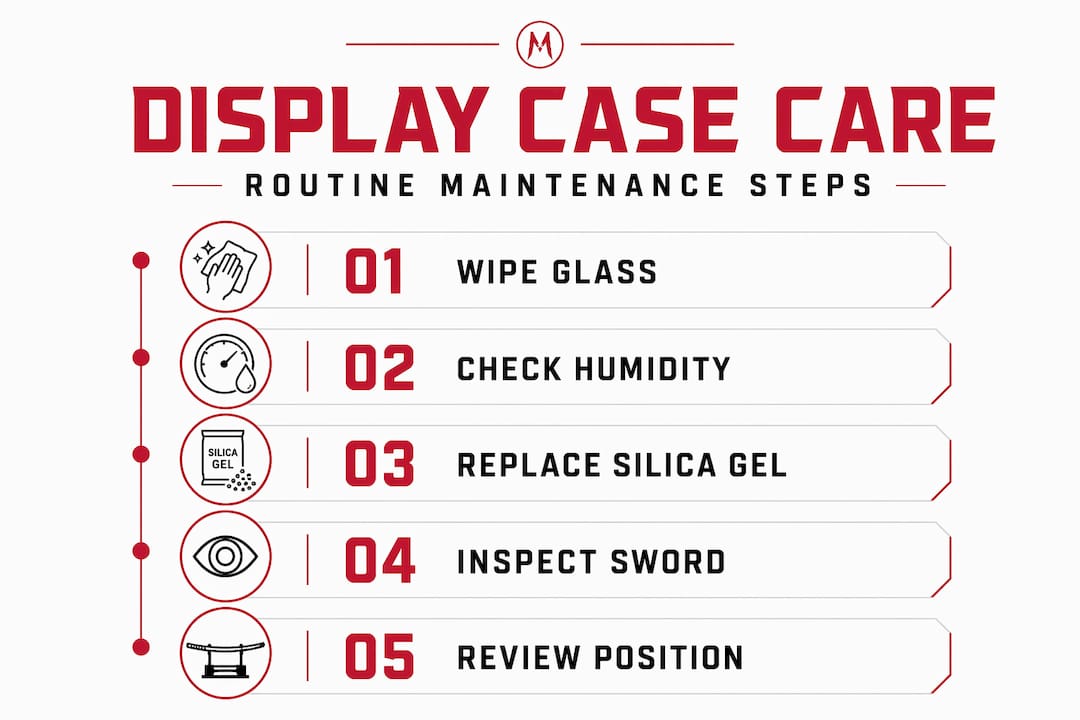
- Position the blade edge-up. Displaying the katana with the cutting edge facing upward (ha up) is the correct orientation. This protects sharpness and prevents uneven pressure on the interior of the saya. Edge-down display is a common beginner mistake that accelerates scabbard wear.
- Monitor humidity weekly. Humidity and temperature fluctuations are among the leading causes of blade deterioration. The ideal indoor range is roughly 40 to 60 percent relative humidity. Above that range, rust becomes a risk. Below it, wood and lacquer can crack.
- Wipe the blade with choji oil every one to two months. Even in a closed case, thin oil application on the steel prevents oxidation. Use a soft cloth, work from the spine toward the edge, and never touch the hamon (temper line) with bare fingers.
- Inspect the tsuka and saya at each maintenance session. Look for any loosening at the habaki (blade collar) or signs of cracking in the lacquered scabbard. A display case does not eliminate wear; it slows it. Active inspection catches small issues before they become serious ones.
- Clean the interior of the case quarterly. Dust accumulates even in sealed cases. Use a dry microfiber cloth on the interior panels and check the lining for any signs of moisture or mold near the base.
Pro Tip: If you live in a coastal area or a region with dramatic seasonal humidity swings, consider a cabinet case with a built-in dehumidifier port. Some higher-end display cases are designed to accommodate small electric dehumidifiers inside the cabinet itself, keeping the interior climate stable year-round.
We also recommend reviewing guidance on sword maintenance and safety to build a routine that matches the demands of your specific blade type, whether it is high-carbon tamahagane steel or modern 1095 construction.
Creative katana display ideas worth considering
Once you understand the preservation basics, you have genuine room to personalize. The best katana display ideas balance visual impact with the functional requirements we have already covered.
- Use layered lighting. LED strip lighting placed behind or beneath the case creates a dramatic backdrop that highlights the hamon and the surface texture of the saya without generating heat that could affect humidity levels. Avoid halogen or incandescent lighting near display cases.
- Incorporate traditional materials as a backdrop. Mounting a display case against a wall panel covered in shoji paper, dark bamboo, or washi fabric grounds the sword visually in its cultural context. A plain white wall can actually compete with the blade; a textured background draws the eye to it.
- Use custom engraving or plaques. Many custom case suppliers offer engraved name plates, clan mon (family crests), or calligraphy panels that can be mounted alongside the case. This turns a display into a coherent installation rather than just a mounted object.
- Display complementary items alongside the sword. A well-placed set of koshirae (fittings), a folded cloth for maintenance, or a small tsuba stand placed near the case adds depth to the display without cluttering it.
- Consider minimalist versus traditional display styles when planning your space. Minimalist cases in acrylic or brushed metal suit contemporary interiors; lacquered wood cases with carved detailing suit more traditional settings.
If you are displaying in a dojo, prioritize function. Wall-mounted cases with quick-release mechanisms make sense when the sword is used in practice. For home display, durability and aesthetics can carry more weight.
My perspective on what a display case actually means
I have been around katanas long enough to know that collectors fall into two camps: those who treat display cases as furniture, and those who treat them as an extension of the sword itself. I am firmly in the second group.
What shifted my thinking was watching a beautifully forged blade develop fading on the saya over two years because the owner displayed it in direct afternoon light. No case. No UV protection. Just a wall mount. That sword lost visible lacquer depth that cannot be recovered without professional restoration. A proper case would have cost a fraction of the repair bill.
What I find genuinely underappreciated is the way a good case changes your relationship to the sword. When humidity monitoring and oil maintenance are built into the rhythm of opening the case, daily care becomes habit rather than effort. The case is the structure that makes that possible. I have also seen collectors who understand condition grading standards realize that a well-maintained, properly displayed sword holds its value far longer than one stored without care.
My honest take: do not buy a display case based on appearance first. Buy it based on UV protection rating, lining material, and humidity features. The aesthetics follow. A case that looks beautiful but fails at its primary job is just an expensive shelf.
— Kenji Smith
Explore premium katanas and display solutions at Moonswords

At Moonswords, we source and craft katanas designed to be displayed with pride. Every blade in our collection reflects centuries-old forging techniques, from clay tempering to full tang construction, built to last for generations when properly cared for. If you are ready to invest in a sword worthy of a museum-grade case, explore our hand-forged katana collection to find pieces crafted by master artisans with genuine attention to the hada, hamon, and overall finish. For collectors seeking something extraordinary, our high-end katana range represents the pinnacle of what a display-quality blade can be.
FAQ
What is a katana display case used for?
A katana display case is a protective enclosure that preserves a sword from UV damage, humidity, and physical impact while presenting it visually. It serves both conservation and display purposes.
What materials are best for a katana display case?
Acrylic with UV-blocking properties is preferred over glass because it is safer for the blade on contact and blocks up to 99.9% of harmful UV rays. Wood-framed cases with felt lining add aesthetic warmth alongside protection.
Should a katana be displayed edge-up or edge-down?
The katana should always be displayed with the cutting edge facing upward. This preserves the sharpness of the ha (edge) and reduces uneven wear on the interior of the saya.
How do I control humidity inside a display case?
Use a small hygrometer to monitor relative humidity and keep it between 40 and 60 percent. Place silica gel packets or a compact dehumidifier inside if your environment runs humid. Stable humidity prevents rust and wood expansion.
Where can I buy a quality katana display case?
Specialty sword retailers, Japanese antique suppliers, and dedicated sword case craftsmen offer the most reliable options. Look for cases that specify UV protection ratings, lining material, and locking mechanisms before purchasing.