

For long, thin, flexible blades built to bend and spring back, 9260 wins on sheer resilience. For heavy cutters and general-purpose swords that need to be tough, forgiving, and easy to heat treat, 5160 is the better bet. That comes down to one metallurgical fact: 9260 leans on high silicon content for its spring-back, while 5160 uses chromium to buy toughness and heat-treat consistency.
Both alloys share a nearly identical carbon backbone, but the modifiers built on top of that carbon send them down different paths.
- 9260’s edge: Silicon content of roughly 1.8% to 2.2% gives it exceptional fatigue resistance and spring-back, which is why it shows up in leaf springs and long, whippy sword geometries.
- 5160’s edge: Chromium at 0.7% to 0.9% makes it more forgiving to heat treat, with strong toughness and a wider margin for error at the forge.
Neither steel outperforms the other in every category, and honestly, the alloy matters less than most buyers assume. A SBG Sword Forum thread that has circulated for years among working smiths makes the point bluntly: differences people attribute to “steel strength” are frequently just differences in heat treatment. Get the quench and temper right, and either steel will serve you well. Get it wrong, and no alloy chart will save the blade.
Key Takeaways
Heat-treat quality and blade geometry usually decide sword performance more than the choice between 9260 and 5160 alone, though 9260 favors long flexible blades and 5160 favors heavy cutters.
| Point | Details |
|---|---|
| Core alloy difference | 9260 relies on high silicon (1.8% to 2.2%) for spring-back; 5160 relies on chromium (0.7% to 0.9%) for toughness and forgiving heat treats. |
| Best use match | Choose 9260 for long, flexible blades like iaijutsu katanas and rapiers; choose 5160 for heavy cutters and general-purpose swords. |
| Target hardness | Aim for Rc 52–56 on heavy cutters and Rc 54–58 for general-purpose blades, since pushing past Rc 60 trades toughness for marginal edge gains. |
| Heat treat over alloy | Community forum tests show heat-treat consistency outweighs alloy choice in most reported flex and chip failures. |
| Maintenance discipline | Both steels need regular oiling and dry storage since neither is stainless, with 5160 holding a slight corrosion edge. |
| Moonswords approach | Moonswords targets Rc 54–58 with double tempers on production katanas and offers custom builds specifying alloy, hardness, and temper style. |
Table of Contents
- 9260 vs 5160: Composition and Mechanical Snapshot
- Why Chromium, Silicon, and Manganese Change Blade Behavior
- What Are the Best Heat Treatment Ranges for 5160 and 9260?
- How Do Toughness, Flex, and Edge Retention Compare in Actual Use?
- Forging, Grinding, and Working These Spring Steels
- Which Sword Types Suit 9260 vs 5160?
- What Do Real Bladesmiths Report When Testing These Steels?
- How Moonswords Chooses Spring Steel for Production Blades
- A Bladesmith’s Take on the 9260 vs 5160 Debate
- Get a Katana Built to Your Exact Spring-Steel Spec
- Sources
- FAQ
9260 vs 5160: Composition and Mechanical Snapshot
The numbers tell most of the story before you even get near a forge. Here’s how the two alloys stack up on paper, based on published composition ranges and the hardness figures makers commonly report for sword-grade heat treats.
The MakeItFrom comparison puts this in useful perspective: the two alloys share roughly 98% of their composition by mass. It’s a small fraction of the recipe producing a large fraction of the personality.
That gap explains why 9260 earns its reputation as a specialist spring steel. The high silicon raises the energy a blade can absorb elastically before it takes a permanent set, which is exactly what you want in a saber or a long katana that needs to snap back straight after a hard cut. Chromium in 5160 does something different: it stabilizes the microstructure during quenching, which is why smiths describe 5160 as more “forgiving” when the quench isn’t perfectly timed.
Why Chromium, Silicon, and Manganese Change Blade Behavior
What happens after that baseline is where 5160 and 9260 diverge, and understanding why matters more than memorizing spec sheets.
Silicon in 9260 raises the yield strength of the martensite formed during quenching, letting the blade flex further before it deforms permanently. It’s the same reason automotive leaf springs use silicon-manganese steels almost universally. Chromium in 5160, by contrast, slows the transformation of austenite into pearlite during cooling, which widens the window a smith has to hit the quench correctly and gives the steel a modest boost in wear resistance. Community composition references consistently tie silicon to spring-back and chromium to that added margin at low percentages, a pattern that shows up across nearly every practical maker guide on the subject.
There’s a tradeoff hidden in that silicon boost, though. Higher silicon content makes 9260 more sensitive to forging temperature. Forge it too cold, and you risk surface cracking that won’t announce itself until you’re grinding the bevels and suddenly see a seam open up. Chromium doesn’t carry the same forging-temperature penalty, which is part of why 5160 has a reputation as the more approachable steel for makers without years of forge-time behind them.
Here’s what that means for actual blade design decisions:
- Edge geometry: 9260’s spring-back makes it more tolerant of thinner edge geometry on long blades, since the blade absorbs flex rather than taking a set.
- Forging discipline: 9260 demands tighter control of forging temperature and more careful normalizing cycles to avoid microcracking.
- Decarburization watch: Both steels decarburize at the surface if held too long at high heat, but 9260’s silicon content makes the scale layer slightly different in appearance, so smiths should grind test coupons rather than judge by color alone.
- Corrosion margin: Chromium gives 5160 a very slight edge in resisting surface rust, though neither steel is remotely stainless.
- Section thickness: Thicker cross-sections (arming swords, heavy cutters) suit 5160’s toughness; thin, long cross-sections (spadroons, long katana) play to 9260’s strengths.
Pro Tip: If you’re new to 9260, run a scrap coupon through your full forge-to-quench cycle before committing a blade blank. The silicon content means visual cues for cracking and decarb look slightly different than what you’re used to with plain high-carbon or chromium steels, and a five-minute test piece saves hours of rework.
What Are the Best Heat Treatment Ranges for 5160 and 9260?
Heat treatment is where these two steels either earn their reputation or ruin a good forging job. Both respond well to oil quenching, but the windows differ enough to matter.
For 5160, austenitizing typically runs between 1,500°F and 1,550°F, followed by an oil quench, then tempering in the 350°F to 450°F range depending on target hardness. For 9260, austenitizing sits a touch higher, generally 1,550°F to 1,600°F, and it demands a more controlled oil quench because the silicon content makes it somewhat more prone to distortion if cooled unevenly. Temper ranges for 9260 run similarly to 5160, roughly 375°F to 450°F, adjusted based on the hardness you’re chasing.
| Heat-treat step | 5160 | 9260 |
|---|---|---|
| Austenitizing temp | 1,500–1,550°F | 1,550–1,600°F |
| Quench medium | Oil (medium-fast) | Oil (controlled, even quench critical) |
| Temper range | 350–450°F | 375–450°F |
| Target Rc, heavy cutter | 52–56 | 52–56 |
| Target Rc, general purpose | 54–58 | 54–58 |
| Rc 60+ feasible? | Yes, with toughness tradeoff | Yes, with greater toughness tradeoff |
Community-reported hardness data suggests functional sword blades in either steel typically land between Rc 52 and Rc 58, and that band isn’t arbitrary. Below Rc 52, edges roll rather than hold. Above Rc 58, you start trading toughness for hardness at a rate that isn’t worth it for a blade meant to survive impact. Some makers do push past Rc 60 on either alloy, and it’s achievable, but the toughness penalty grows faster than the edge-retention benefit, and the risk of a chip turning into a crack rises with it.
Pro Tip: Run a double temper on both steels rather than a single soak. Two cycles at your target temperature, with a full cool between them, relieve residual stresses that a single temper often leaves behind, and that matters more for spring steels than for simple high-carbon blades because the martensite formed is under more internal strain to begin with.
How Do Toughness, Flex, and Edge Retention Compare in Actual Use?
Numbers on a datasheet only matter once they translate into how a blade behaves in someone’s hands, and this is where the two steels feel genuinely different.
- Toughness: Both steels resist chipping well at proper hardness, but 5160’s chromium-stabilized microstructure gives it a slight edge in absorbing sudden impact without cracking, which is why it’s the default choice for heavy medieval-style cutters.
- Flexibility and fatigue resistance: 9260 pulls ahead here by a clear margin. Its silicon content lets it flex further and return to true more consistently after repeated stress, which matters enormously for long, thin blades subjected to repeated bending in cutting or sparring.
- Edge retention: At matched hardness, edge retention between the two is close. Geometry and sharpening angle do more work than alloy choice at this hardness range.
- Corrosion resistance: Neither steel is stainless, but 5160’s chromium content gives it a very slight resistance advantage. Both require the same basic maintenance discipline.
That maintenance point deserves its own attention. Both alloys are plain high-alloy carbon steels, meaning they will rust if neglected. A light coat of oil after handling, storage away from humidity, and periodic wipe-downs with a proper maintenance routine keep either steel looking and performing the way it should for decades.
Forging, Grinding, and Working These Spring Steels
Spring steels reward patience and punish shortcuts, and that’s true for both 5160 and 9260, just in slightly different ways.
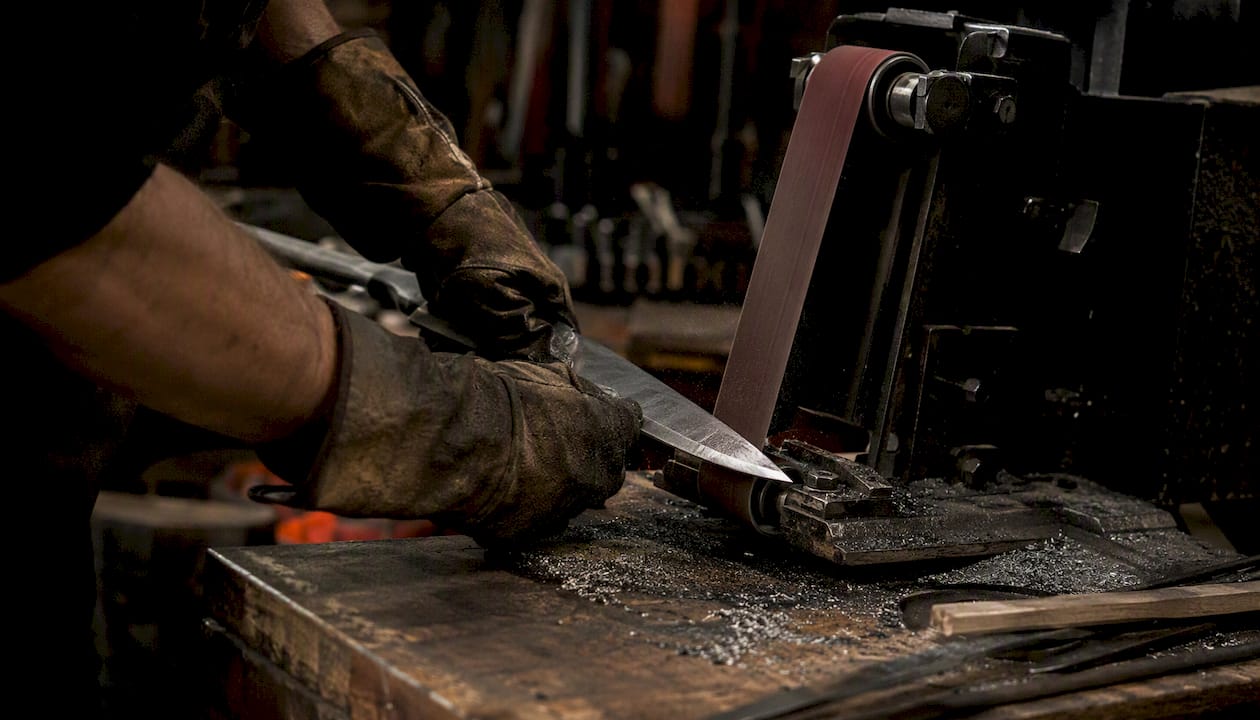
Both steels work-harden noticeably during forging, which means periodic normalizing cycles matter more here than with simple carbon steels like 1095. Skip the normalizing, and you’re forging in stresses that show up later as warping during quench, sometimes weeks after you thought the blade was finished. For 9260 specifically, temperature discipline during forging isn’t optional. Forge it below its ideal working range and the silicon content raises the odds of surface microcracks that widen during grinding. 5160 tolerates a wider forging-temperature window, one reason it’s often recommended as the first spring steel a smith tackles.
Stock removal works fine on either steel, though 9260’s higher silicon content can make it feel slightly more abrasive on belts compared to 5160. Differential hardening (the clay-tempering technique associated with traditional katana production) works on both, but 5160’s more forgiving quench behavior makes it the steel most smiths reach for first when attempting a hamon, while 9260 is typically better suited to a full, even temper given its role in long, flexible blades where uniform spring-back matters more than a differential hardness line.
A practical shop sequence for either steel looks like this:
- Forge to rough shape, staying within the steel’s recommended temperature window throughout.
- Normalize two to three times, cooling fully between cycles, to relieve forging stresses.
- Grind to near-final geometry, leaving a small margin for post-heat-treat cleanup.
- Austenitize at the steel’s specified temperature, soaking evenly.
- Quench in oil, moving the blade steadily to avoid uneven cooling.
- Temper twice at the target temperature band, cooling fully between cycles.
Pro Tip: Warping during quench is almost always a symptom of uneven heating, not a flaw in the steel. Preheat your quench oil to the manufacturer’s recommended range, and make sure your forge or oven holds a truly even soak temperature across the blade’s length before you pull the trigger on the quench. This matters even more for long blades in either alloy, where a few degrees of temperature gradient can translate into visible curve.
Which Sword Types Suit 9260 vs 5160?
Matching the alloy to the blade’s job is the single highest-leverage decision in this entire comparison, more important than chasing an extra point or two of Rockwell hardness.
- Long iaijutsu and cutting katanas: 9260 is the stronger choice when spring-back is paramount, since these blades flex under cutting stress and need to return true, cut after cut. A flexible-blade design benefits directly from 9260’s fatigue resistance.
- Sparring and test-cutting katanas: Either steel works, but many makers favor 9260 for its resilience under repeated flex, particularly on longer blade lengths.
- Heavy arming swords and medieval-style cutters: 5160 is the more forgiving and generally recommended choice, given its toughness under impact and its wider heat-treat margin for thick, heavy cross-sections.
- Rapiers and thin thrusting blades: 9260’s spring-back is valuable here too, since a rapier blade that takes a permanent bend under a parry is a functional failure, not just a cosmetic one.
- Display and collector pieces: Either steel performs beautifully, so the choice often comes down to whichever alloy better complements the intended finish, hamon style, or historical accuracy of the piece.
A spec sheet handed to a heat treater might read: “5160, target Rc 54 to 56, double temper at 400°F, oil quench, differential temper for hamon” for a heavy cutter, versus “9260, target Rc 54 to 56, double temper at 400°F, full even temper, no differential” for a long, flexible cutting blade.
What Do Real Bladesmiths Report When Testing These Steels?
Datasheets predict behavior. Forums and hands-on testing confirm or complicate it, and the community record on 5160 versus 9260 is worth taking seriously precisely because it’s messier than the marketing copy.
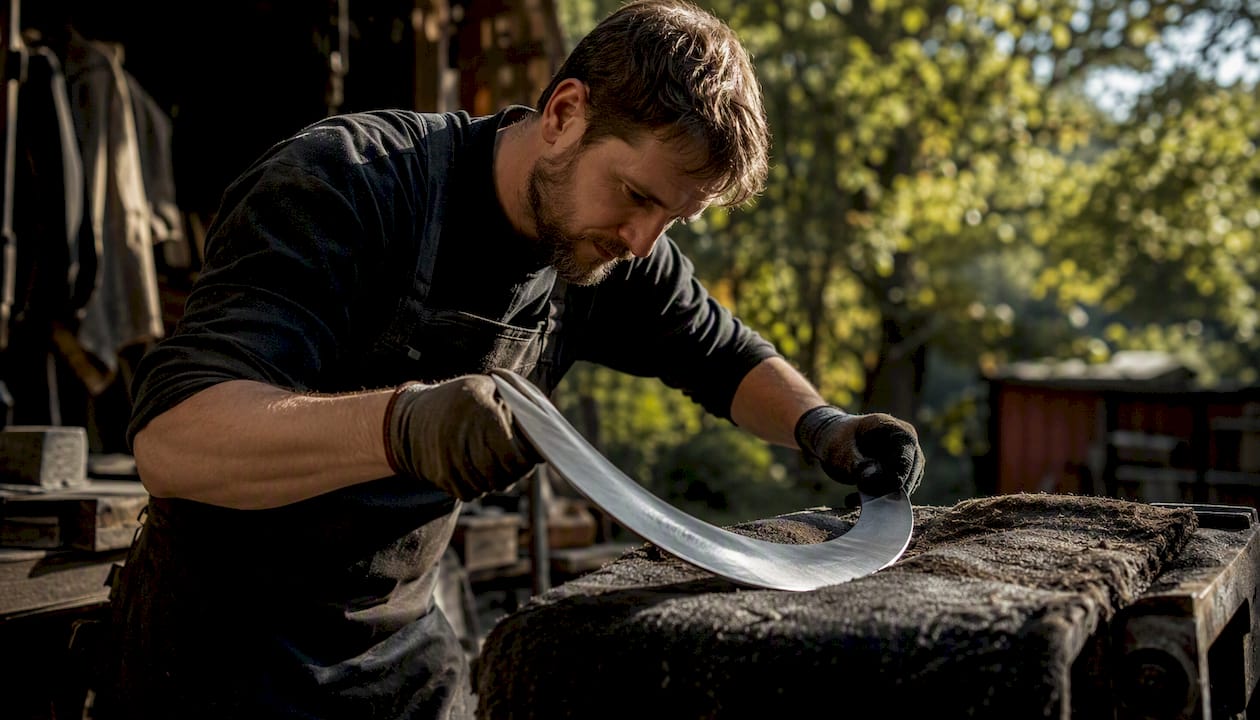
Reported hardness numbers for functional sword heat treats on both steels commonly cluster in the Rc 52 to 58 range, matching what the datasheets suggest is achievable without sacrificing toughness. But the spread within that range, reported by different makers on different forums, is often wider than the alloy difference itself, which tells you something important: technique variance between smiths frequently exceeds the variance between these two steels.
The SBG Sword Forum discussion referenced earlier is instructive precisely because it pushes back on the common assumption that 9260 is categorically “stronger.” Posters in that thread describe flex tests where properly heat-treated 5160 and 9260 blades performed comparably at matched hardness, with 9260 showing more visible spring-back and 5160 showing marginally better resistance to a sudden impact chip. Neither steel broke in those tests when treated correctly; the failures reported elsewhere in maker communities almost always trace back to a skipped normalizing cycle, an uneven quench, or a temper that was too rushed.
What these reports actually tell you:
- Flex tests measure elastic recovery, which is where 9260 tends to show its advantage most clearly.
- Chip and edge tests measure resistance to localized impact, where 5160’s toughness edge shows up.
- Breakage anecdotes almost always point back to heat-treat error rather than a fundamental alloy weakness, so weigh individual “it snapped” stories against sample size before drawing conclusions.
How Moonswords Chooses Spring Steel for Production Blades
Selecting a steel for a production sword isn’t just a metallurgy exercise. It’s a matter of matching the alloy, the heat treat, and the intended use so the finished blade performs exactly the way a collector or practitioner expects it to.
Moonswords evaluates spring steel choice against three criteria: the blade’s intended geometry, the buyer’s stated use case (display, light training, or cutting), and the historical authenticity of the build. For katanas designed with flex and cutting performance in mind, we favor heat-treat specs that land in the Rc 54 to 58 range with a double-temper cycle, matching the ranges discussed throughout this guide. For traditional differential-hardened pieces where the hamon is central to the piece’s character, our master artisans lean on clay-tempering techniques refined over generations, applied with careful attention to quench uniformity.
Every finished blade goes through hardness verification and a visual inspection of the hamon line and geometry before it leaves the workshop. That’s standard practice across our production, whether the piece comes from our general catalog or from a fully custom commission built to a buyer’s own spec sheet.
- Katanas built for cutting and sparring commonly target Rc 54 to 58 with a differential or full temper, depending on the piece.
- Display-focused pieces prioritize hamon clarity and geometry, with hardness specs matched to the steel and finish.
- Custom builds allow buyers to specify alloy, target hardness, and temper style directly, letting practitioners with strong preferences (say, a smith who wants a 9260 build for maximum spring-back) get exactly the blade they’re picturing.
If you’re weighing a functional build against a display piece, our guide on T10 and 1095 alternatives covers how other common sword steels stack up against the spring-steel options discussed here.
A Bladesmith’s Take on the 9260 vs 5160 Debate
The internet loves a clean winner, and the 9260 versus 5160 debate gets flattened into “which is stronger” more often than it should. That framing misses the point. Neither steel is stronger in any way that matters to a buyer holding the finished sword. What matters is which failure mode you’re trying to avoid, and which flex behavior you actually want in your hand.
Here’s the opinion most guides won’t state plainly: if you’re a first-time smith picking between these two for your first spring-steel build, 5160 is the more honest recommendation almost every time, not because it’s objectively better, but because it punishes mistakes less severely. 9260’s silicon content is a genuine performance advantage for long blades, but that advantage only shows up when the heat treat is executed with real precision. A slightly-off temper on 5160 still gives you a usable, tough blade. A slightly-off temper on 9260 gives you a blade that might crack the first time it takes a hard parry.
The forum data backs this up more than most alloy comparisons deserve credit for. When makers report failures, they’re almost always describing a heat-treat lapse, not a metallurgical dead end. That should reframe how buyers and new makers think about steel selection generally: the alloy sets the ceiling, but the smith’s discipline determines whether the blade ever gets close to it.
What Moonswords prioritizes reflects that reality directly:
- Function-first blade design, where geometry and heat treat are chosen to match how a piece will actually be used, not just which steel sounds more impressive on a spec sheet.
- Traditional clay-tempering and forging techniques, applied with the temperature and cycle discipline that spring steels specifically demand.
- Customer-driven use cases, since a display collector and a cutting practitioner need genuinely different specs even from the same alloy.
If you have a specific alloy or heat-treat target in mind, tell us. Custom commissions let you specify the steel, the target hardness, and the temper approach directly.
Get a Katana Built to Your Exact Spring-Steel Spec
Reading a comparison chart only gets you so far. At some point, the alloy, the hardness target, and the temper style need to turn into an actual forged blade, and that’s where most independent buyers hit a wall: sourcing consistent 9260 or 5160 stock and finding a smith willing to hit a precise Rc target is far harder than picking the steel itself. Moonswords removes that friction entirely. Every build goes through our production workshop with hardness verification built into the process, so the spec you request is the spec you receive.
If you know you want a long, flexible cutting katana, our entry-level katana collection includes builds using resilient spring steels suited to sparring and test-cutting. If you’re after a museum-grade piece with a traditional hamon and full tang construction, browse the high-end katana collection, where master artisan Zhao Peiyan’s techniques bring clay-tempering precision to every blade. And if neither fits, a custom commission lets you specify blade geometry, target hardness, and temper approach directly, the same way a smith would hand a spec sheet to a heat treater.
Start by browsing the full Moonswords collection or reach out with your target specs, and we’ll walk you through what’s achievable for your build.
Sources
Verifying alloy composition and hardness claims yourself is good practice before committing to a build, and these are the references worth bookmarking.
When reading composition tables, remember that published ranges represent acceptable manufacturing tolerances, not fixed numbers. Two mill batches of the same designation can differ slightly within those ranges, which is one more reason a test coupon beats trusting the spec sheet blindly.
FAQ
Is 9260 Steel Good for a Sword?
Yes. 9260’s high silicon content gives it strong fatigue resistance and spring-back, making it a solid choice for long, flexible blades like cutting katanas and rapiers, provided the heat treat is executed with careful temperature control.
How Good Is 9260 Spring Steel Compared to Other Options?
9260 ranks among the more resilient spring steels used in swordmaking, with community reports and datasheets showing it holds up well to repeated flexing, though it demands more forging precision than steels like 5160.
Is 5160 Steel Better Than 1095?
5160 generally offers better toughness and shock resistance than 1095 because of its chromium content and alloy design, while 1095 is a simpler high-carbon steel that can reach comparable hardness but with less forgiveness during heat treatment.
What Are the Disadvantages of 5160 Steel?
5160 has slightly lower silicon-driven spring-back than 9260, which makes it less ideal for very long, thin blades where maximum flex recovery matters, and its chromium content offers only mild corrosion resistance rather than true stain resistance.