

For most saya and handle restoration work, start with buffalo horn scales or spacers from a specialist supplier like KnifeKits, or a pre-cut saya fitting from KatanasForSale if you want to skip the shaping work entirely. Buffalo horn resists cracking and takes a fine polish better than most substitutes, and it comes in sizing consistent enough to match standard tang and saya dimensions. Check the comparison below before you order.
TL;DR:
- Choose buffalo horn scales or fittings based on precise measurements of length, width, thickness, taper profile, and bore size to ensure proper fit from the start.
- Verify the source’s transparency about origin, ideally from farmed water buffalo, and confirm legal importation when purchasing, especially in the United States.
- Use a progressive sanding approach from 220 to 1000 grit, avoiding shortcuts or ammonia cleaners to prevent surface damage and ensure a polished, natural finish.
- Opt for custom-matched fittings during construction if possible, as they ensure correct sizing and finish, saving time and reducing the need for adjustments.
- Prioritize vendors who provide clear dimensions, honest sourcing details, and quality finish examples, as these choices impact compatibility, ethics, and overall value.
Table of Contents
- How Do You Choose the Right Buffalo Horn Piece?
- Is Buffalo Horn Ethically Sourced?
- How Do You Finish and Care for Horn Fittings?
- When Should You Restore Original Fittings vs. Replace Them?
- What Actually Matters When You Buy Buffalo Horn Fittings
- Get a Fitting Matched to Your Build, Not Just Close Enough
- Where to Learn More or Buy Buffalo Horn Fittings
- Sources
- FAQ
How Do You Choose the Right Buffalo Horn Piece?
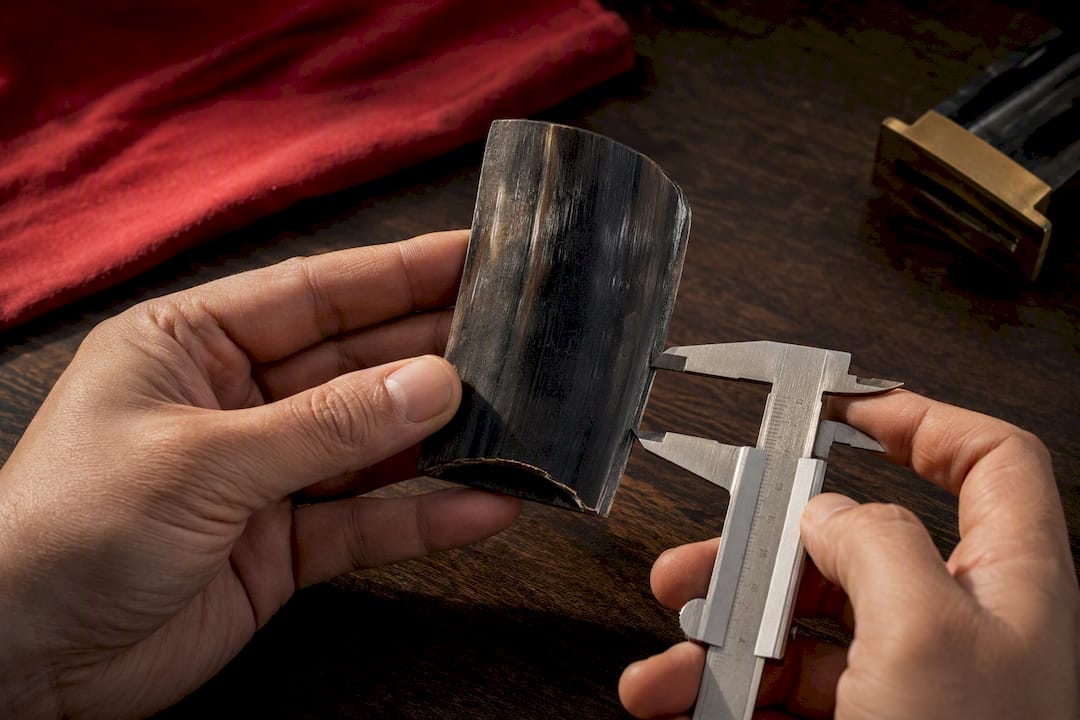
Getting the fit right starts with your tape measure, not your browser tab. Buffalo horn is forgiving to shape but unforgiving to guess on. Measure before you shop.
- Length and width of the fitting area. Measure the exact span your saya or handle needs covered, plus a small margin for final sanding.
- Thickness at the thickest point. Horn scales are usually sold by nominal thickness (0.75 in., 0.875 in., etc.), so match this to your tang or core thickness.
- Taper profile. A hidden-tang handle usually needs a gradual taper toward the pommel; a full-tang build often needs near-uniform thickness with a flatter profile.
- Bore or tang clearance. If the piece needs drilling for a pin or tang channel, confirm there’s enough material margin around that bore before cutting.
- Raw versus polished. Raw horn gives you full control for hand-fitting and custom shaping. Polished, pre-cut pieces save time but limit how much you can adjust the final fit.
Before you commit to a seller, ask for three things: photos with a ruler or coin for scale, exact dimensions in writing, and a stated country or region of origin. Vendors who volunteer all three tend to have far fewer returns than ones who describe a piece only in adjectives.
Pro Tip: Order a slightly oversized raw scale rather than a piece cut to exact spec. Horn shrinks a little as it dries and stabilizes, and you’ll want the margin to correct for it during final fitting.
Is Buffalo Horn Ethically Sourced?
Most reputable horn sellers describe their material as a by-product of the meat and dairy industry, harvested from farmed water buffalo rather than wild or endangered animals. NaturalBeauties, for example, frames its buffalo horn as repurposed material sourced from Vietnam, tied to existing agricultural supply chains rather than a separate harvest. That distinction is worth asking about directly, because “ethical” without any origin detail is just a marketing word.
What to look for before you buy:
- A named country or region of origin, not just “sustainably sourced.”
- Language distinguishing farmed water buffalo from any protected or wild species.
- Willingness to answer a direct email question about sourcing, not just a badge on the product page.
On the legal side: trade in water buffalo horn is generally legal in the United States when properly documented, since domestic water buffalo aren’t a CITES-protected species. If a listing is vague about species or origin, or you’re importing a large quantity, it’s worth a quick check with U.S. Fish and Wildlife Service guidance or a direct question to the seller before you buy.
How Do You Finish and Care for Horn Fittings?
Horn rewards patience and punishes shortcuts. Rushing the sanding stage is the single most common way hobbyists ruin a good piece.
- Sand in a progression. Start around 220 grit to shape, then move through 400, 600, and 1000 grit before any polish. Skipping grits leaves visible scratch lines that no oil will hide.
- Stabilize if needed. Thin or porous sections sometimes benefit from a light stabilizing resin, though most solid scales don’t need it.
- Finish with oil or a light sealer. A small amount of mineral oil or a horn-specific finishing oil brings out the natural grain without building an artificial shine.
- Drill carefully. Use a sharp bit at slow speed, and back the horn with wood or a sacrificial block to prevent chipping as the bit exits.
- Maintain routinely. Wipe with a dry or slightly oiled cloth, keep the piece away from prolonged high humidity or direct heat, and skip harsh solvents that strip natural oils from the surface.
Pro Tip: Never use ammonia-based cleaners on horn. They dull the surface almost immediately and can leave a chalky residue that’s difficult to polish back out.
For broader upkeep once the fitting is installed, our guide on maintaining a samurai sword covers cleaning intervals and storage conditions that apply just as much to horn fittings as to the blade itself.
When Should You Restore Original Fittings vs. Replace Them?
Kenji Smith has spent years around Moonswords’ craft content, watching collectors wrestle with this exact decision on old and new builds alike.
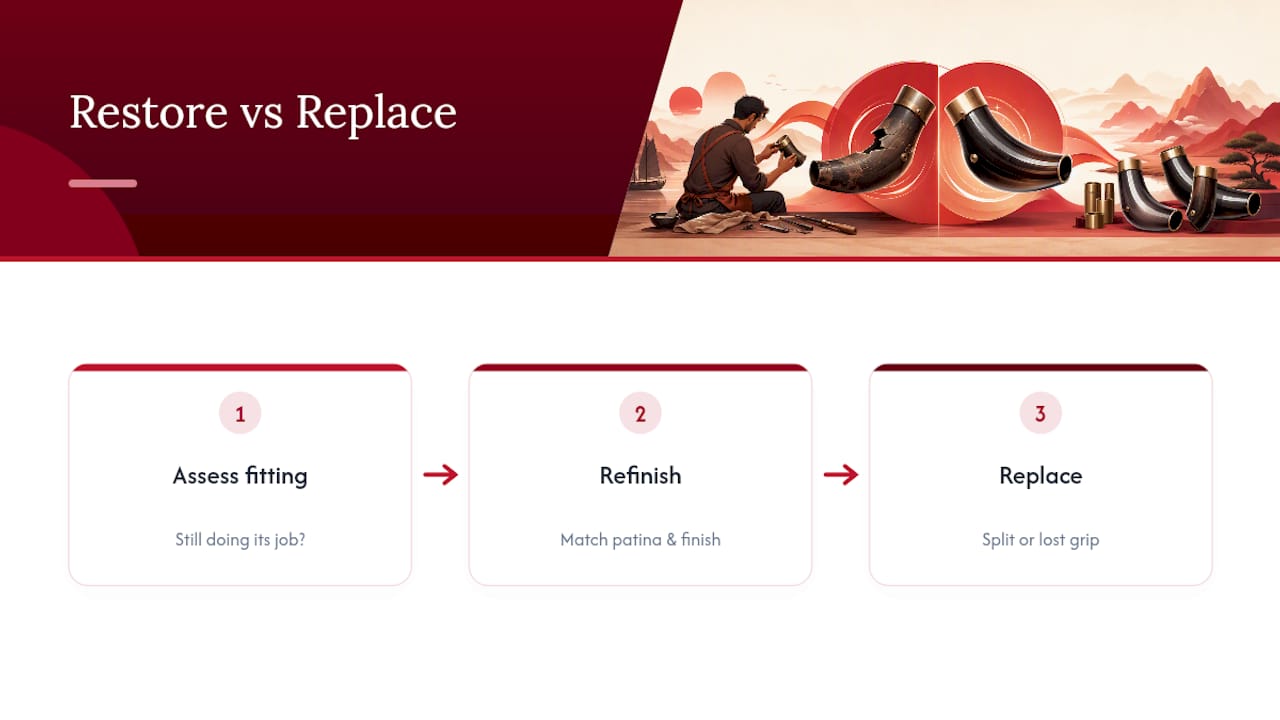
The practical test is simple: does the fitting still do its job? If yes, match the patina and finish rather than starting over. If the horn has split along the grain or lost its grip on the tang, that’s a structural issue no amount of oil will fix, and replacement is the right call.
What Actually Matters When You Buy Buffalo Horn Fittings
Most buying guides treat horn like a commodity, comparing prices as if one seller’s scale is interchangeable with another’s. It isn’t. The material varies more than people expect, and the vendors who publish real dimensions and honest sourcing language save you far more grief than the ones with the lowest price tag.
The conventional advice to “just buy the cheapest horn piece and sand it down” undersells how much time bad stock costs you. A scale with hidden checking or an unstated thickness can cost you an entire evening of shaping before you discover it won’t work. Buy from a source that shows scale in its photos and states dimensions plainly, even if it costs a few dollars more.
If there’s one thing worth prioritizing first, it’s origin transparency. A vendor who tells you where the horn came from and how it was processed is usually the same vendor who measured it correctly and photographed it honestly. The two habits tend to travel together.
— Kenji Smith
Get a Fitting Matched to Your Build, Not Just Close Enough
Buying raw stock and shaping it yourself works fine when you have the tools and the time. Moonswords exists for the collectors who’d rather not gamble an evening on a scale that might not fit. Our artisans match buffalo horn fittings directly to a custom build during construction, so the taper, thickness, and finish are correct the first time, not adjusted after the fact.
Every custom commission goes through the same craftsmen responsible for our high-end katana collection, using full tang construction and finishing standards built for display and handling alike. You get a fitting that’s sized to your piece, not sanded down from a generic blank, backed by direct customer support if anything about the fit needs adjusting after delivery. If you’re planning a custom build or a full restoration, start by browsing our katana collection and requesting a quote on matched horn fittings for your specific project.
Where to Learn More or Buy Buffalo Horn Fittings
- HornImpex’s material guide explains the keratin structure behind horn’s strength and workability.
- KnifeKits’ handle taper listings show real dimensions and pricing for raw stock.
- NaturalBeauties’ horn accessories demonstrate finish quality and sourcing language worth comparing against.
- Moonswords’ katana collection is where to request custom-matched fittings for an existing or new build.
FAQ
Is Buffalo Horn Legal to Buy and Own?
Yes. Water buffalo horn is generally legal to buy, sell, and own in the United States because domestic water buffalo aren’t a protected species under CITES. Check documentation on large imports or unclear listings to be safe.
Where Can You Find Buffalo Horn for Sale?
Specialist suppliers like KnifeKits sell raw and semi-finished horn stock, KatanasForSale lists pre-cut saya fittings, and NaturalBeauties sells finished horn accessories that show the material’s polished look.
Is Buffalo Horn Ethically Sourced?
Most sellers describe buffalo horn as a by-product of the farmed meat and dairy industry rather than a separate harvest, though the strength of that claim depends on whether the vendor names an origin and process rather than just using the word “ethical.”
Are Buffalo Horn Fittings Valuable?
Buffalo horn fittings hold moderate material value on their own, generally priced around $80 for a complete pre-cut saya fitting set. Their real value comes from how well they’re matched and finished on the finished piece, which is why custom-matched fittings tend to hold more collector appeal than generic stock pieces.