

Hilt wrapping, known in Japanese craft tradition as tsuka-ito (the cord) and tsukamaki (the wrapping technique), is defined as the structured cord binding applied to a katana’s handle that secures grip, protects the wood core, and maintains structural integrity during use. The role of hilt wrapping in a katana extends far beyond decoration. It is the direct interface between the swordsman’s hand and the blade, and its quality determines both safety and performance. Understanding tsukamaki means understanding how a katana truly functions, whether you collect it, display it, or study its history.
How does hilt wrapping affect katana grip and control?
Grip security is the primary function of tsuka-ito, and it depends almost entirely on wrapping tension. Tension is the most critical factor in wrapping a katana handle. Looseness creates a dangerous, ineffective grip that shifts under pressure. Professional tsukamaki artists spend years perfecting the balance where the wrap feels like an extension of the wood itself.
The wrapping style also shapes how the hand reads the handle. The hineri-maki style features twisted cords that form raised ridges along the handle. These ridges nest into the natural creases of the hand, creating tactile feedback that tells the practitioner exactly where their grip sits without looking down. This is not a minor comfort feature. In a fast kata, that feedback is the difference between a controlled movement and a slipping grip.
Key grip benefits that proper tsukamaki delivers:
- Non-slip surface: Cord ridges prevent the hand from rotating during movement.
- Pressure distribution: A well-tensioned wrap spreads grip force across the full palm, reducing fatigue during extended practice.
- Tactile orientation: Ridge patterns let the practitioner feel blade alignment without visual confirmation.
- Shock absorption: The cord layer cushions vibration and pressure, protecting the wrist and forearm.
- Safety margin: A secure wrap prevents the handle from separating from the blade under stress.
Pro Tip: If your wrap feels “mushy” when you squeeze the handle, the cord has lost tension. Have it rewrapped before you handle the sword again. A loose wrap is a safety hazard, not just a comfort issue.
What traditional and modern materials are used for katana hilt wrapping and why?
Material choice defines how a wrap performs over time. Traditionalists prefer silk ito for its strength and moisture absorption. Silk provides a natural feel and adequate flexibility while maintaining grip even under sweaty conditions. This is why silk dominated Japanese sword production for centuries. The fibers compress under tension without cracking, and the surface texture stays consistent even after repeated use.

Cotton and leather are popular modern choices due to their durability and cost-effectiveness. Practitioners who train daily often choose these materials because they withstand repeated handling better than silk at a lower price point. The key requirement for any material is that it retains flexibility. A stiff wrap loses responsiveness and can crack at the fold points, which undermines both comfort and structural integrity.
| Material | Grip Feel | Durability | Moisture Handling | Best Use |
|---|---|---|---|---|
| Silk | Smooth, refined | Moderate | Excellent absorption | Ceremonial, display, traditional practice |
| Cotton | Firm, textured | High | Good | Practice iaito, everyday handling |
| Leather | Dense, grippy | Very high | Poor (can stiffen) | Heavy handling, display |
| Synthetic cord | Variable | High | Variable | Budget builds, casual use |
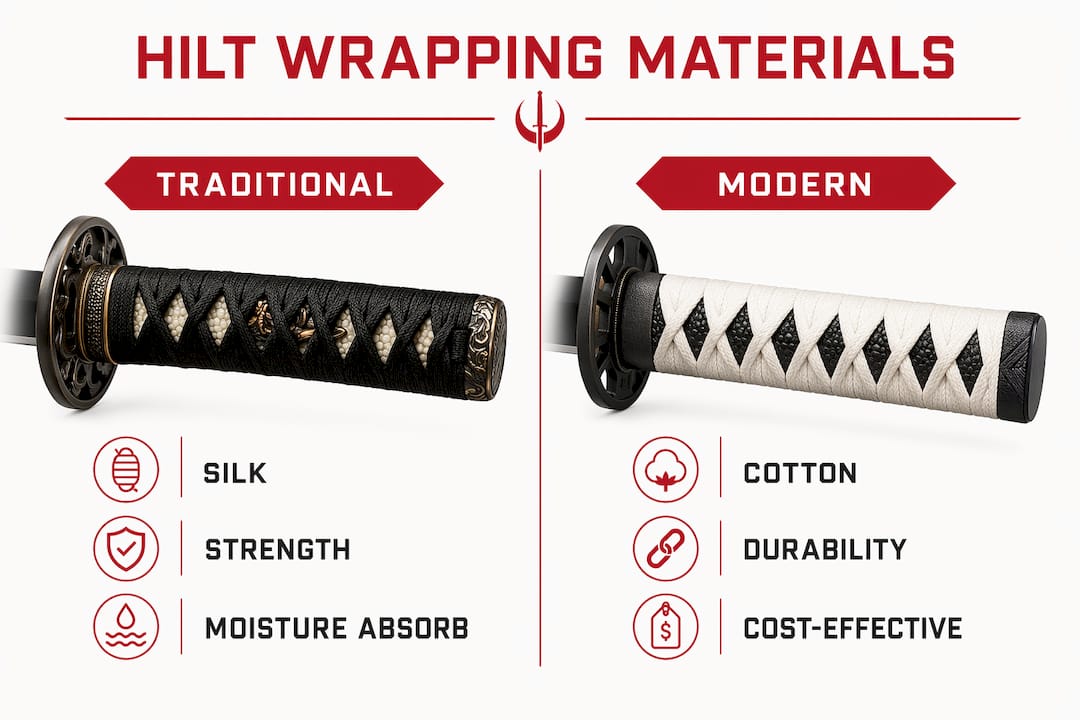
The selection of wrapping material balances tradition and practicality. Many modern practitioners choose cotton or leather despite silk’s historic prestige, simply because everyday training demands a material that holds up to sweat, repetition, and time. For collectors and those who value the full traditional experience, silk remains the gold standard. For those who train hard and often, cotton or leather is the honest choice.
What are the key katana hilt wrapping techniques?
Three wrapping patterns define the craft of tsukamaki, each with a distinct structural role and historical context.
Hineri-maki is the most widely used style in modern production katanas. The cord is twisted before each pass, creating the raised diamond ridges that define the classic katana handle look. This pattern delivers strong tactile grip and is well suited for martial practice. It is the style most practitioners encounter first, and for good reason. It performs reliably across a wide range of hand sizes and grip strengths.
Tsumami-maki uses a pinching technique at each fold, producing a flatter, tighter surface. This style appears more frequently on formal or ceremonial swords where a clean, refined appearance is valued alongside function. The reduced ridge height makes it slightly less grippy than hineri-maki but more visually polished.
Jabara-maki, sometimes called “snake belly” wrapping, creates an accordion-like pattern with pronounced folds. This style is less common in practice swords but appears on high-end display pieces and historically significant reproductions. Its complex structure requires advanced skill to execute correctly.
Across all three styles, hishigami play a critical role. These small paper triangles are tucked under the wrap folds to keep the diamond patterns uniform and prevent slippage under use. A katana without hishigami produces a “mushy” grip because the folds shift under pressure. Hishigami are the hidden infrastructure of a quality wrap.
Ito wrapping also stabilizes the handle’s internal structure, preventing the wood core from splitting under the pressure of repeated handling. A securely wrapped tsuka extends the katana’s lifespan and protects the user from handle failure. This structural function is often overlooked by collectors who focus only on aesthetics, but it is just as important as grip quality.
Pro Tip: When examining a katana for purchase, press the wrap firmly at the center of the handle. If the diamonds shift or the cord gives more than a millimeter, the hishigami are absent or the tension is insufficient. Walk away or budget for a professional rewrap.
You can learn more about handle construction methods and how traditional techniques translate into modern builds at Moonswords.
How should martial artists and collectors maintain and select hilt wrapping?
Selecting the right tsuka-ito starts with cord length. A typical katana handle requires approximately 3–5 meters of tsuka-ito cord for a full, secure wrap. The exact length depends on handle size and wrapping style. Always buy slightly more cord than you think you need. Running short mid-wrap forces a join, which creates a weak point in the handle.
Follow this process when selecting and maintaining your wrap:
- Measure your handle first. A standard katana tsuka runs 26–30 centimeters. Longer handles for two-handed styles require more cord. Confirm the length before purchasing ito.
- Match the style to your use. Practice-oriented wraps prioritize grip security and shock absorption over aesthetics. For a practice iaito, choose hineri-maki in cotton or silk. If you display, tsumami-maki in silk or leather gives a cleaner look.
- Check tension monthly. Grip the handle firmly and rotate your hand. If the wrap moves independently of the wood, it needs retightening or full replacement.
- Keep the wrap dry. Moisture weakens cord fibers over time. After handling, wipe the handle with a dry cloth. Store the sword in a location with stable humidity.
- Inspect the hishigami annually. On high-quality swords, the paper triangles hold the diamond pattern in place. If the pattern looks uneven or the folds have flattened, the hishigami may have compressed or shifted.
- Know when to seek professional rewrapping. If the cord shows fraying, discoloration, or the tension cannot be restored by hand, a professional tsukamaki artist should handle the rewrap. Attempting a full rewrap without practice often results in uneven tension that compromises both safety and appearance.
Pro Tip: Hand size matters more than most guides admit. If you have large hands, a tighter wrap with pronounced ridges gives better control. Smaller hands often benefit from a slightly softer wrap that allows the fingers to seat fully around the handle. When possible, hold the sword before buying.
For collectors deciding between katana handle customization options, Moonswords offers detailed guidance on matching wrap style and material to your specific needs.
Key Takeaways
Proper tsuka-ito wrapping is the foundation of katana grip safety, structural longevity, and martial performance, requiring correct tension, quality materials, and regular maintenance.
| Point | Details |
|---|---|
| Tension is non-negotiable | A loose wrap creates a dangerous grip; professional tension makes the cord feel integral to the wood. |
| Material choice reflects use | Silk suits tradition and display; cotton and leather serve daily training through durability and grip. |
| Hishigami are essential | These paper triangles maintain diamond uniformity and prevent fold slippage under pressure. |
| Cord length requires planning | Standard handles need 3–5 meters of tsuka-ito; always buy extra to avoid mid-wrap joins. |
| Style follows function | Hineri-maki suits martial practice; tsumami-maki and jabara-maki serve formal and display contexts. |
Why hilt wrapping deserves more respect than it gets
I have handled hundreds of katanas over the years, and the wrapping is almost always the first thing I check and the last thing most buyers think about. People spend hours researching steel type, hamon geometry, and blade curvature. Then they pick up a sword with a loose, hishigami-free wrap and wonder why the handle feels dead in their hand.
The wrap is not cosmetic. It is the sword’s handshake with its user. A well-executed hineri-maki in quality silk tells you something about every decision made in that sword’s construction. It signals that the maker cared about the full object, not just the blade. Conversely, a sloppy wrap on an otherwise decent sword is a warning sign about quality control across the board.
What I find most compelling is how tsukamaki connects the practitioner to a living craft tradition. The techniques used today, including hishigami placement, cord tension, and fold geometry, are the same ones documented in Edo-period sword manuals. When you hold a properly wrapped tsuka, you are holding the same grip geometry that a samurai trained with. That continuity is not sentimental. It is practical. The geometry works because centuries of practitioners refined it through use.
My recommendation for any serious enthusiast: learn to recognize quality wrapping before you buy, and treat rewrapping as routine maintenance rather than a repair. Your sword’s performance and longevity depend on it more than almost any other factor you can control after purchase.
— Kenji Smith
Moonswords’ hand-forged katanas with expert hilt wrapping
Every katana in the Moonswords collection is built with the same attention to tsuka-ito that this craft demands. From cord selection to hishigami placement and final tension, the wrapping on each sword reflects the same standards applied to the blade itself.

Whether you are looking for a full-tang, hand-forged katana under $300 or a collector seeking a museum-quality piece with traditional silk wrapping, Moonswords has a build for you. The high-end katana collection showcases master-level tsukamaki alongside premium blade work, giving you the full picture of what expert craftsmanship looks like from handle to tip. Explore the full range at Moonswords and find a sword wrapped to last.
FAQ
What is tsuka-ito and why does it matter?
Tsuka-ito is the cord wrapped around a katana’s handle (tsuka) using the tsukamaki technique. It secures grip, absorbs shock, and stabilizes the wood core against splitting under use.
How long does katana hilt wrapping last?
With regular maintenance and proper storage, a quality wrap lasts many years of regular handling. Fraying, loosening, or flattened diamond patterns are signs that rewrapping is needed.
What is the best material for katana hilt wrapping?
Silk is the traditional choice for its grip and moisture absorption. Cotton and leather are preferred for daily training due to their durability and lower cost, provided they retain flexibility.
What are hishigami and do all katanas have them?
Hishigami are small paper triangles tucked under the wrap folds to keep the diamond pattern uniform and prevent slippage. Quality katanas include them; budget builds often omit them, resulting in a softer, less secure grip.
How do I know if my katana needs rewrapping?
Squeeze the handle firmly and rotate your hand. If the wrap shifts independently of the wood, or if the cord shows fraying or uneven diamond spacing, the wrap needs professional attention.